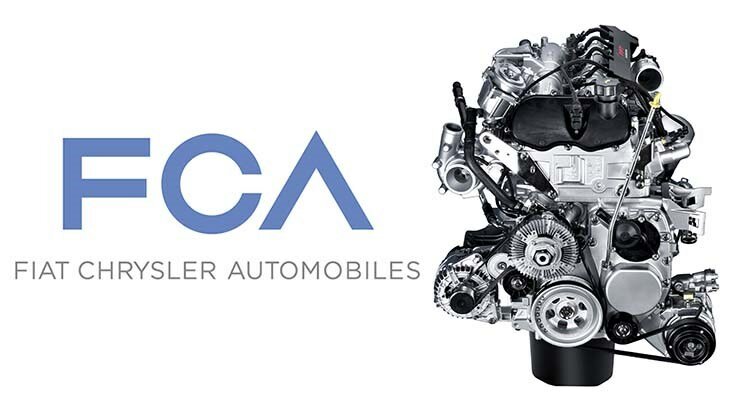
Cleveland, Ohio – The U.S. Department of Justice (DOJ) filed a lawsuit against Fiat Chrysler Automobiles (FCA US LLC) Tuesday, accusing the automaker of cheating on emissions tests for 104,000 vehicles equipped with 3L diesel engines.
Though not nearly as large as the Volkswagen diesel cheating scandal discovered in 2015 (more than 500,000 vehicles), the cases are similar in that regulators are accusing the automaker of using software code to cheat tests. Officials say Jeep and Ram vehicles would operate in a low-emissions mode during testing and pollute far more during real-world driving.
FCA officials strenuously denied the charges in a statement released soon after the DOJ filed suit.
“The company intends to defend itself vigorously, particularly against any claims that the company engaged in any deliberate scheme to install defeat devices to cheat U.S. emissions tests,” FCA US officials said.
Last week, FCA announced it had developed updated emissions software calibrations to address regulators concerns for Jeep Grand Cherokee SUV and Ram 1500 pickup models equipped with the 3L diesel. If federal and California regulators approve the 2017 model year emissions controls, FCA officials say they can apply the software fix to 2014 through 2016 models.
Provisions of the Clean Air Act mandate that automakers disclose all controls, including software, that could impact emissions and to justify keeping those controls on the vehicle. DOJ officials said the Ram and Jeep models had eight software-based features that were not disclosed on emissions applications and that the features lessen the effectiveness of emissions control systems during standard driving conditions.
Regulators told FCA US officials in January that they were being investigated for diesel cheating. FCA officials said they have been working with regulators to explain why the software tools were in place and what they do, but apparently their answers did not satisfy the U.S. Environmental Protection Agency (EPA). The DOJ sued on behalf of the EPA.
”Based upon this investigation, the complaint alleges that one or more of these undisclosed software features, alone or in combination with the others, renders inoperative, bypasses, and/or defeats the vehicles’ emission control systems, which were installed to make the vehicles comply with Clean Air Act emission standards,” DOJ officials said.
Each Clean Air Act violation can carry penalties ranging from $37,500 to $45,268 (fines increased following the discovery of Volkswagen’s cheating), putting FCA US’ potential fines at $3.9 billion to $4.7 billion. Volkswagen faced more than $18 billion in fines but settled with regulators for $15 billion – $10 billion to buy back tainted cars and $5 billion in fines.
About the author: Robert Schoenberger is the editor of Today’s Motor Vehicles and a contributor to Today’s Medical Developments and Aerospace Manufacturing and Design. He has written about the automotive industry for more than 17 years at The Plain Dealer in Cleveland, Ohio; The Courier-Journal in Louisville, Kentucky; and The Clarion-Ledger in Jackson, Mississippi.