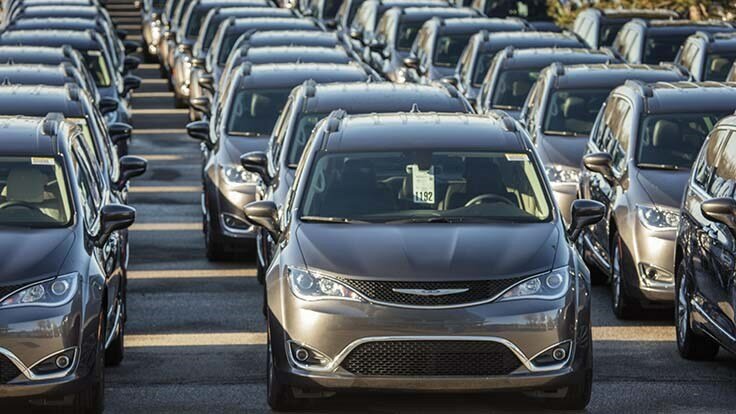
Auburn Hills, Michigan – The 2017 Chrysler Pacifica has earned a five-star overall safety rating from the U.S. National Highway Traffic Safety Administration (NHTSA), the agency’s top safety mark.
The Chrysler brand’s minivan also scored five stars – the highest possible rating – in each of the crash tests included in NHTSA’s safety assessment program.
The tests simulate:
- Frontal collision
- Side-impact simulating a two-vehicle collision
- Side-impact simulating a single-vehicle collision with a pole
These latest test results complement the Top Safety Pick+ rating previously given to the 2017 Chrysler Pacifica by the Insurance Institute for Highway Safety (IIHS).
“These results are a clear indicator of our unwavering commitment to engineering excellence,” says Mike Dahl, head of Vehicle Safety and Regulatory Compliance, FCA – North America. FCA US engineers conducted more than 8,500 simulated crashes and more than 80 full-vehicle impacts. These tests led to the development of a body structure that integrates 12 different steel grades.
High-strength steel accounts for 72%, of which 38% is Advanced High-strength Steel (AHSS). And because these materials were used strategically, the new Pacifica’s body structure is also 250 lb lighter than that of the vehicle it replaced – an enhancement that contributes to the vehicle’s class-leading 28mpg highway-cycle fuel-economy rating.
NHTSA’s rating system acknowledges the availability of three “recommended” safety features: rear-view cameras, lane-departure warning, and forward-collision warning. The 2017 Chrysler Pacifica checks the box for each category.
The blending of radar sensors and cameras is known as sensor-fusion technology. Such redundancy affords greater object-detection precision. Similar systems on competitive vehicles feature one technology or the other. Once reserved for luxury-segment vehicles, FCA US currently makes sensor-fusion technology available across six vehicle segments – from small SUV to minivan. It is the company’s technology of choice for driver assistance in crash mitigation.
The Pacifica’s system is rated “superior,” and its performance in each of the following IIHS crash tests was classified as “good,” the highest-possible rating. The tests simulate:
- Side impact with a large SUV or pickup truck
- Moderate-offset frontal impact
- Small-offset frontal impact
- Roof-deformation consistent with a rollover
- Rear collision capable of inducing whiplash
Source: FCA US LLC