Cleveland, Ohio – Some business decisions come fast, like slashing costs when the economy shifts or hiring outside investigators in the face of a scandal.
Others develop slowly, like Ford’s decision to move production of medium-duty trucks to Ohio from Mexico.
Ford’s decision is getting a lot of attention because Republican presidential candidate Donald Trump has claimed credit for shaming Ford into dropping plans to invest $2.5 billion in Mexico and instead put that cash into Ohio.
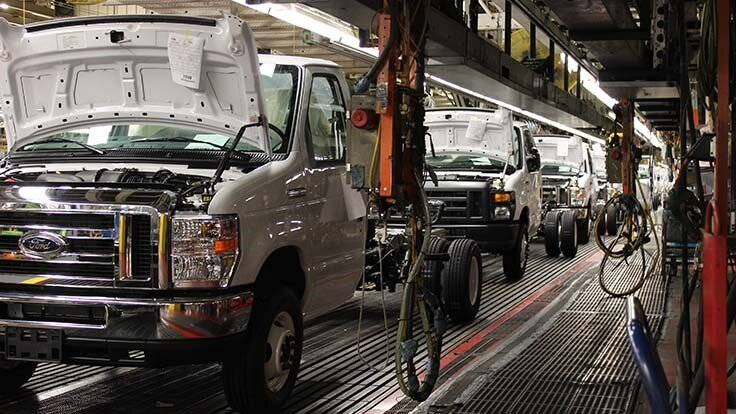
First the facts – Ford is still investing $2.5 billion in Mexico for engine and transmission production. And Ford recently spent about $168 million in Avon Lake, Ohio, to retool the former van plant into a commercial truck facility.
Trump claims that his frequent speeches criticizing Ford’s plans prompted the Ohio investment. That would be a pretty neat trick given that the decision to move production got its start in 2006.
That year, Ford was having problems with diesel engines in its F-Series Super Duty truck line. Customers were complaining that the engines weren’t producing the advertised power levels, and they were failing often.
Ford officials blamed the problems on Navistar, the designer and manufacturer of the 6L Powerstroke diesel. Navistar blamed Ford’s service technicians for not properly maintaining the vehicles. Warranty costs mounted, and class action lawsuits eventually forced a 2013 settlement in which Ford extended warranties on the faulty engines and their components.
The dispute between Navistar and Ford got so severe that in 2007, the companies sued each other, shattering a 30-year relationship that had appeared to be one of the most stable partnerships in the automotive industry.
And that’s where medium-duty trucks come in.
Navistar and Ford were co-owners of the Blue Diamond 50-50 joint venture in Mexico that produced Ford F-650 and F-750 trucks in addition to medium-duty trucks for Navistar’s brands. Keeping a family together when the parents are suing each other is pretty tough.
In 2009, Ford and Navistar settled their suit, and as part of the deal, Navistar took over more of Blue Diamond, making it a 75-25 joint venture. The plant continued to supply trucks to Ford dealers, but shipments declined sharply.
By 2011, Ford faced a simple choice – abandon the potentially lucrative medium-duty market, or take production in house.
At the time, it was negotiating terms with the United Auto Workers (UAW), and job security was a big issue for workers because several vehicles were ending their lifespans, leaving plants without guaranteed futures.
Ford officials had told the union that it was going to end E-Series van production in Ohio in favor of Transit commercial van production in Missouri, leaving the Avon Lake plant without a product. Union and company negotiators then agreed to move F-650 and F-750 production to the Ohio plant to protect most of the jobs there.
Ohio politicians jumped on board and offered tax breaks to help fund the investment which they announced shortly after the UAW contract ink dried in late 2011. Ford’s product launch plans called for a slow ramp-up of the Transit and a slow draw-down of the E-Series, so the Ohio plant didn’t start its full conversion to the trucks until earlier this year. Production of the F-650 and F-750 began there in August.
Trump’s criticisms of companies moving jobs overseas has struck a chord with potential voters, and it makes a good topic for politicians to debate.
But the ball that landed in Ohio with workers starting truck production in August started rolling nearly a decade ago when George W. Bush was still president. So unless Donald Trump’s campaign started a lot earlier than he claims, he didn’t have anything to do with this decision.