McLean, Virginia – The U.S. Department of Transportation’s National Highway Traffic Safety Administration (NHTSA), the Insurance Institute for Highway Safety (IIHS), and 20 automakers representing more than 99% of the U.S. sales market, have announced plans to make automatic emergency braking (AEB) a standard feature on virtually all new cars by Sept 1, 2022.
Automakers making the commitment are Audi, BMW, FCA US LLC, Ford, General Motors, Honda, Hyundai, Jaguar Land Rover, Kia, Maserati, Mazda, Mercedes-Benz, Mitsubishi Motors, Nissan, Porsche, Subaru, Tesla Motors Inc., Toyota, Volkswagen, and Volvo Car USA. The unprecedented commitment means that this important safety technology will be available to more consumers more quickly than would be possible through the regulatory process.
In 2015, 10 companies – Audi, BMW, Ford, General Motors, Mazda, Mercedes Benz, Tesla, Toyota, Volkswagen, and Volvo – announced plans to include AEB in future cars, but that commitment was smaller and had no defined implementation date.
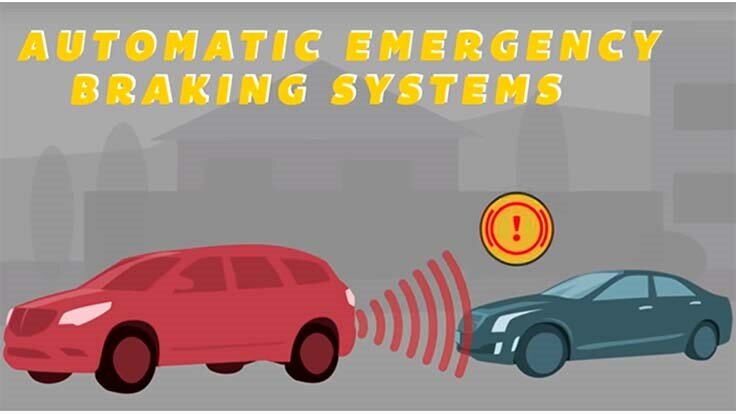
AEB systems help prevent crashes or reduce their severity by applying the brakes for the driver. The systems use on-vehicle sensors such as radar, cameras, or lasers to detect an imminent crash, warn the driver, and apply the brakes if the driver does not take sufficient action quickly enough.
NHTSA estimates that the agreement will make AEB standard on new cars three years faster than could be achieved through the formal regulatory process. During those three years, according to IIHS estimates, the commitment will prevent 28,000 crashes and 12,000 injuries.
“It’s an exciting time for vehicle safety. By proactively making emergency braking systems standard equipment on their vehicles, these 20 automakers will help prevent thousands of crashes and save lives,” says U.S. Transportation Secretary Anthony Foxx.
Based on mounting evidence that AEB effectively reduced crashes and injuries in the U.S. and around the world, NHTSA and IIHS issued a challenge to industry in September 2015 to encourage automakers to voluntarily make AEB a standard feature. A series of meetings followed to establish details of the commitment.
“IIHS member companies strongly support the adoption of effective safety technologies,” says IIHS chairman and CEO of American Family Insurance, Jack Salzwedel. “Deploying AEB on a wide scale will allow us to further evaluate the technology’s effectiveness and its impact on insurance losses, so that more insurers can explore offering discounts or lower premiums to consumers who choose AEB-equipped vehicles.”
“We’re getting these safety systems into vehicles much faster than what would have been otherwise possible,” says NHTSA Administrator, Dr. Mark Rosekind. “A commitment of this magnitude is unprecedented, and it will bring more safety to more Americans sooner.”
“The benefits of this commitment are far reaching,” says IIHS Executive Vice President and Chief Research Officer David Zuby. “From injuries and deaths averted to the recovery of productivity that would otherwise be lost in traffic jams caused by the crashes prevented. It also assures that all Americans will benefit from this technology.”
“With roadway fatalities on the rise, the commitment made today has the potential to save more lives than almost anything else we can accomplish in the next six years,” says Deborah A.P. Hersman, president and CEO of the National Safety Council. “Including all models in the agreement ensures that safety isn’t for just those who can afford it.”
NHTSA and IIHS also announced that Consumer Reports will assist in monitoring automaker progress toward meeting the AEB commitment. Jake Fisher, director of auto testing for Consumer Reports, says, “We have been calling on automakers to make automatic emergency braking standard in all new vehicles, and today is an important step toward reaching that goal. This proven technology is among the most promising safety advances we’ve seen since electronic stability control almost two decades ago. We look forward to working with NHTSA and IIHS to help put this plan into action and hold automakers accountable for their commitments.”
The commitment will make AEB standard on virtually all light-duty cars and trucks with a gross vehicle weight of 8,500 lb or less beginning no later than Sept. 1, 2022. AEB will be standard on virtually all trucks with a gross vehicle weight between 8,501 lb and 10,000 lb beginning no later than Sept. 1, 2025.
The commitment takes into account the evolution of AEB technology. It requires a level of functionality that is in line with research and crash data demonstrating that such systems are substantially reducing crashes, but does not stand in the way of improved capabilities that are just beginning to emerge. The performance measures are based on real world data showing that vehicles with this level of capability are avoiding crashes.
To encourage further development of AEB technology, NHTSA will accelerate its research on more advanced AEB applications, including systems that reduce the risk of collisions with pedestrians. In December, NHTSA announced plans to rate AEB systems and other advanced technologies under its 5-Star Safety Ratings beginning in model year 2018.
Source: NHTSA